
⸺ Synova Research
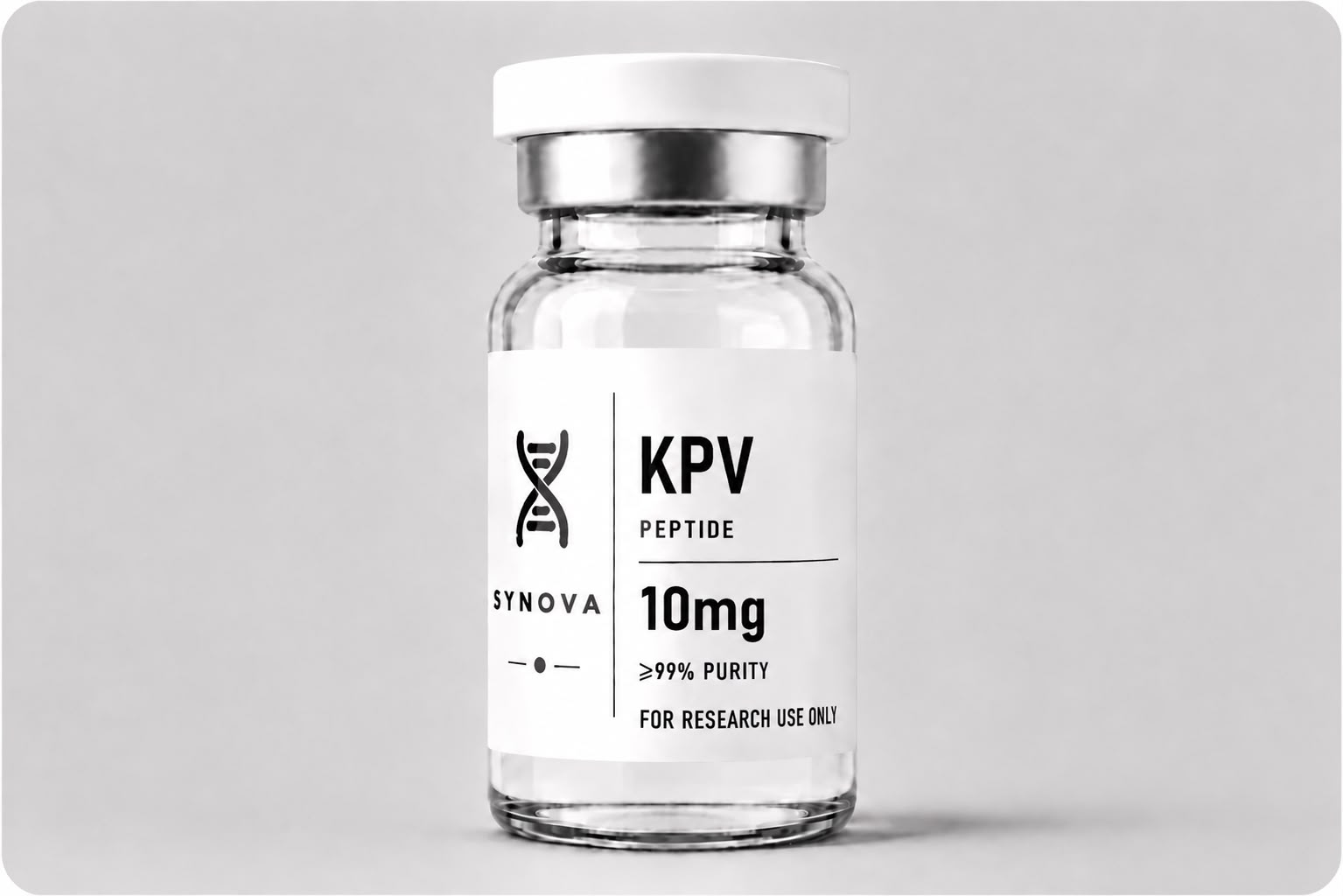
KPV
C-terminal tripeptide of α-MSH studied for its anti-inflammatory signalling, gut-lining research and skin biology in preclinical models.
Secure checkout via UK open banking. Free shipping on orders over £100.
Independently tested
COA on request
Next-day UK dispatch
Order before midnight
Research use only
Not for human consumption
⸺ Important
- • Peptides sold in lyophilized form
- • Strictly for laboratory research
⸺ Overview
About KPV
KPV (Lysine-Proline-Valine) is the C-terminal tripeptide fragment of alpha-melanocyte-stimulating hormone (α-MSH). Researchers investigate it for its anti-inflammatory action via melanocortin pathways, with interest in gastrointestinal, dermatological and immune-modulation models.
⸺ Mechanism of Action
How it works
KPV is thought to enter cells and modulate NF-κB signalling, reducing pro-inflammatory cytokine output. In animal models, this translates to dampened inflammatory response in gut, skin and systemic tissues without the pigmentary effects of full-length α-MSH.
⸺ Research
Areas of study
Gut inflammation models
Rodent studies report reduced inflammatory markers and improved mucosal integrity in colitis-style models following KPV exposure.
Skin and wound biology
Preclinical work has examined KPV in dermatitis and wound-healing models, with reductions in local inflammatory cytokines.
Immune modulation
In vitro research describes downregulated NF-κB activity and altered cytokine profiles across immune cell lines.
Summarised from preclinical literature for informational purposes only. Not medical or veterinary advice. Synova Research products are sold strictly for in-vitro and laboratory research.
⸺ Details
Specification
- CAS
- 67727-97-3
- Intended use
- Research use only.
- Storage
- Lyophilised: cool, dry, dark. Reconstituted: refrigerate at 2–8°C.
- Solubility
- Vial holds up to 3mL.
- Shelf life
- Lyophilised: up to 24 months. Reconstituted: 4–6 weeks refrigerated.
- Handling
- Maintain sterile technique.
You might also research
View all →
RTTA
Investigational triple receptor agonist targeting GLP-1, GIP and glucagon — studied in animal models for appetite control, energy expenditure and glucose balance.
TRZT
Dual GLP-1 and GIP receptor agonist studied in preclinical models for glucose regulation, insulin sensitivity and energy balance.
SMGT
Synthetic analogue of the GLP-1 hormone used in research to study glucose regulation, insulin secretion and the incretin response.