
⸺ Synova Research
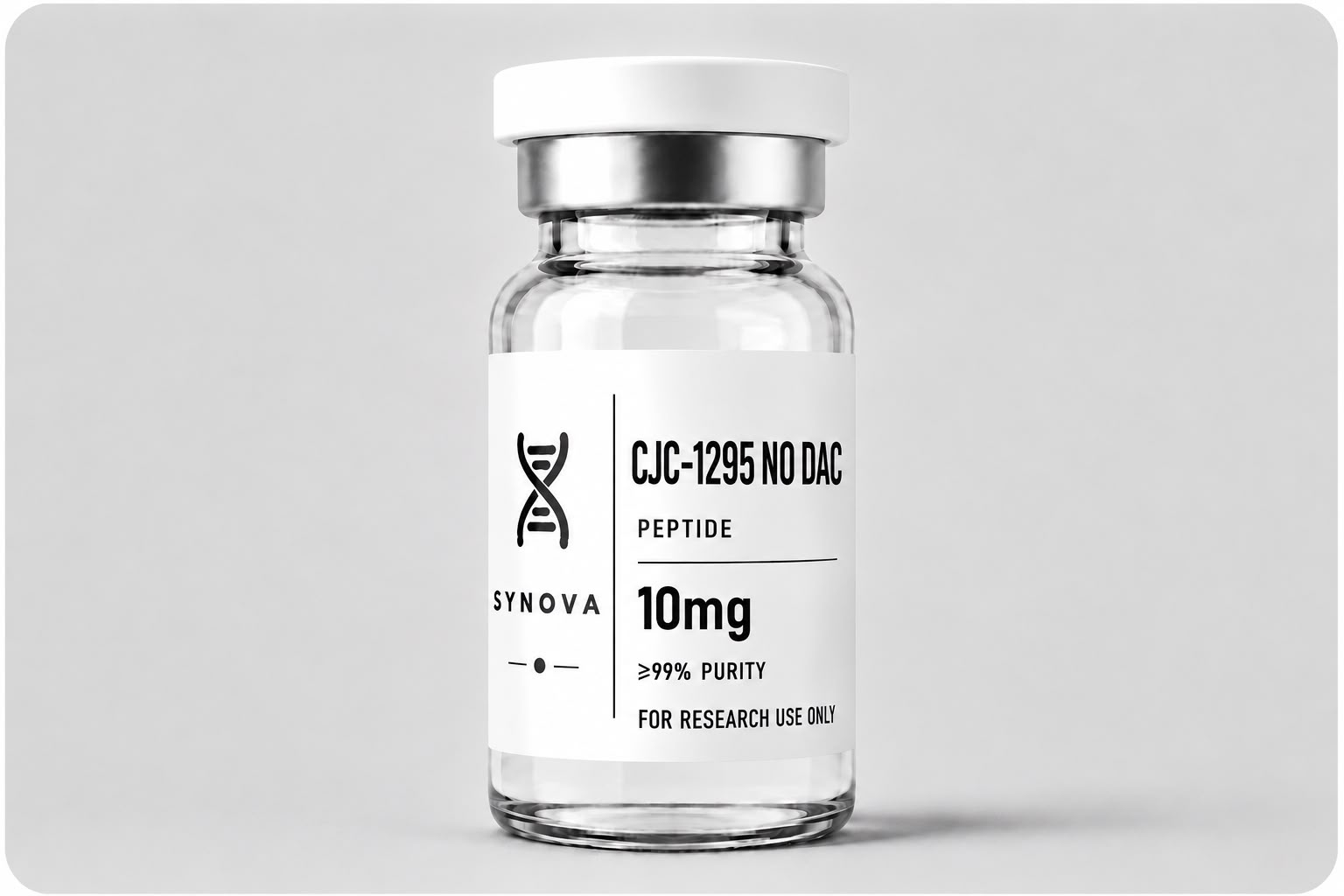
CJC-1295 no DAC
Modified GHRH analogue (also known as Mod GRF 1-29) studied in preclinical models for pulsatile growth hormone release.
Secure checkout via UK open banking. Free shipping on orders over £100.
Independently tested
COA on request
Next-day UK dispatch
Order before midnight
Research use only
Not for human consumption
⸺ Important
- • Peptides sold in lyophilized form
- • Strictly for laboratory research
⸺ Overview
About CJC-1295 no DAC
CJC-1295 without DAC is a synthetic growth hormone releasing hormone (GHRH) analogue with a short half-life. Researchers use it in animal models to study short, pulse-like growth hormone signalling, often alongside secretagogues such as Ipamorelin.
⸺ Mechanism of Action
How it works
It binds GHRH receptors on the pituitary, prompting a brief burst of growth hormone release. Without the drug affinity complex (DAC), it clears quickly, producing a pulse that more closely mimics natural secretion patterns in rodent studies.
⸺ Research
Areas of study
Growth hormone pulsatility
Animal work reports short-lived rises in growth hormone and IGF-1 following administration, used to model natural secretion rhythms.
Combination signalling
Preclinical studies pair GHRH analogues with ghrelin-receptor secretagogues to examine additive pituitary responses.
Recovery and tissue models
Researchers examine downstream IGF-1 signalling in connective tissue and muscle repair models.
Summarised from preclinical literature for informational purposes only. Not medical or veterinary advice. Synova Research products are sold strictly for in-vitro and laboratory research.
⸺ Details
Specification
- CAS
- 863288-34-0
- Intended use
- Research use only.
- Storage
- Lyophilised: cool, dry, dark. Reconstituted: refrigerate at 2–8°C.
- Solubility
- Vial holds up to 3mL.
- Shelf life
- Lyophilised: up to 24 months. Reconstituted: 4–6 weeks refrigerated.
- Handling
- Maintain sterile technique.
You might also research
View all →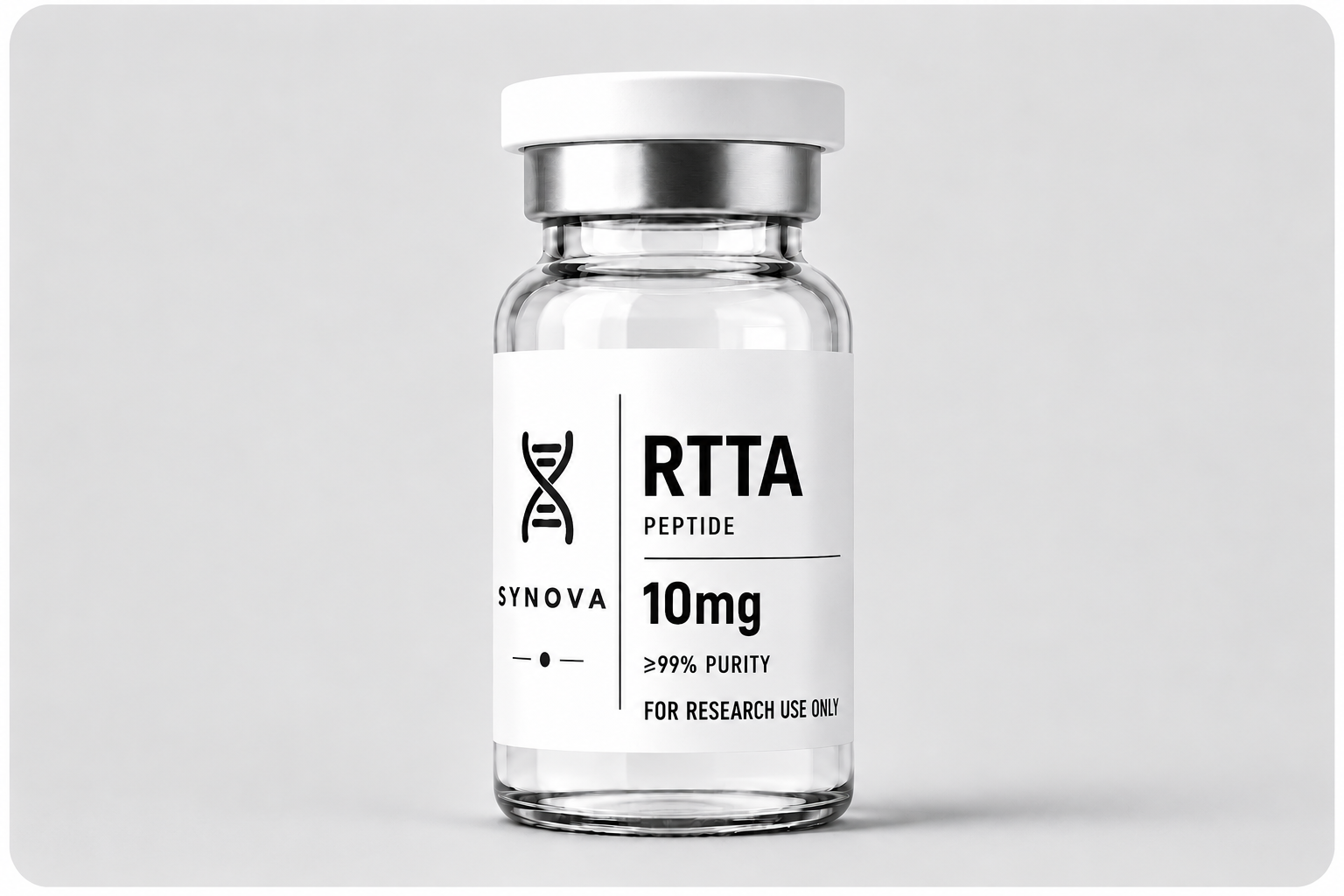
RTTA
Investigational triple receptor agonist targeting GLP-1, GIP and glucagon — studied in animal models for appetite control, energy expenditure and glucose balance.
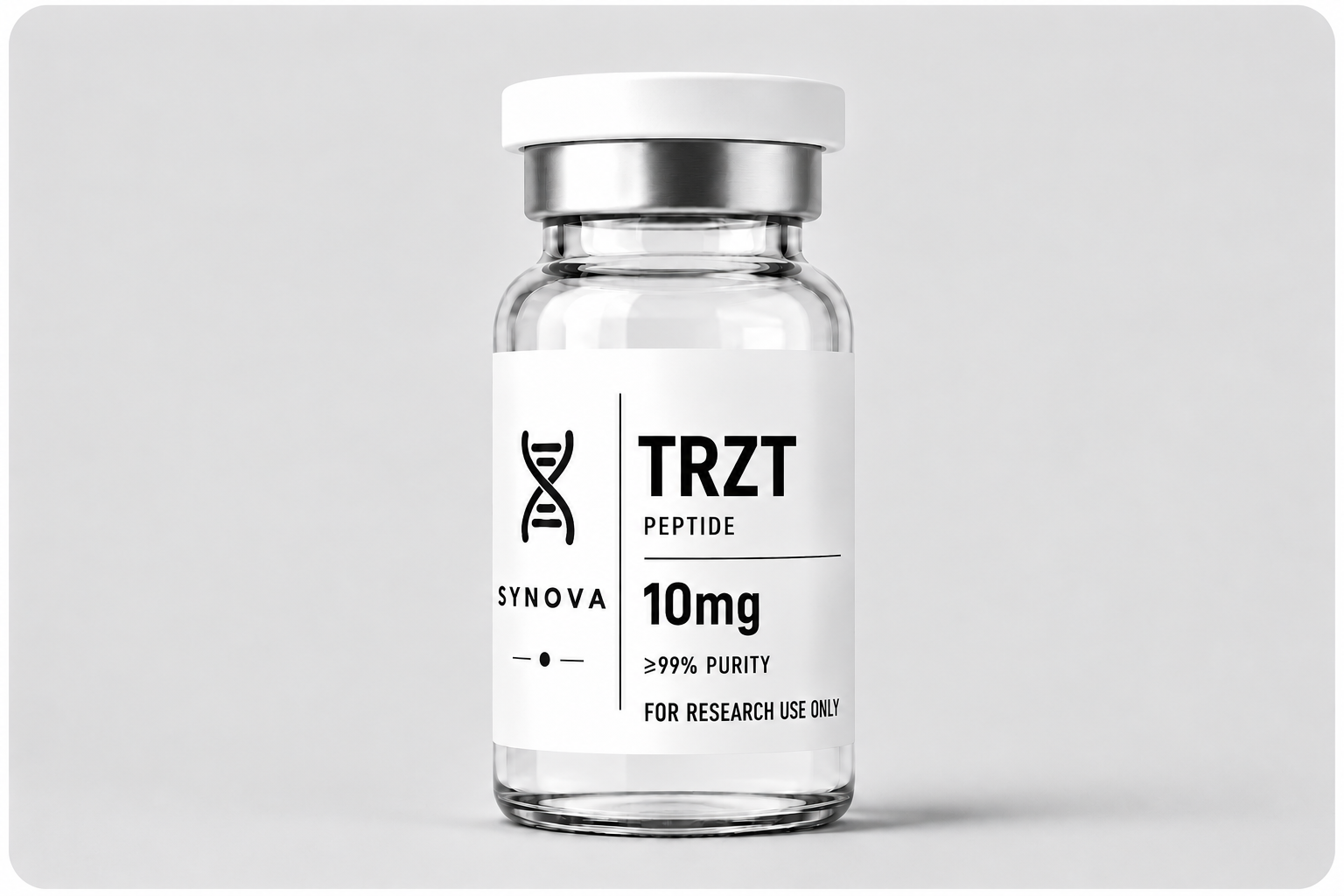
TRZT
Dual GLP-1 and GIP receptor agonist studied in preclinical models for glucose regulation, insulin sensitivity and energy balance.
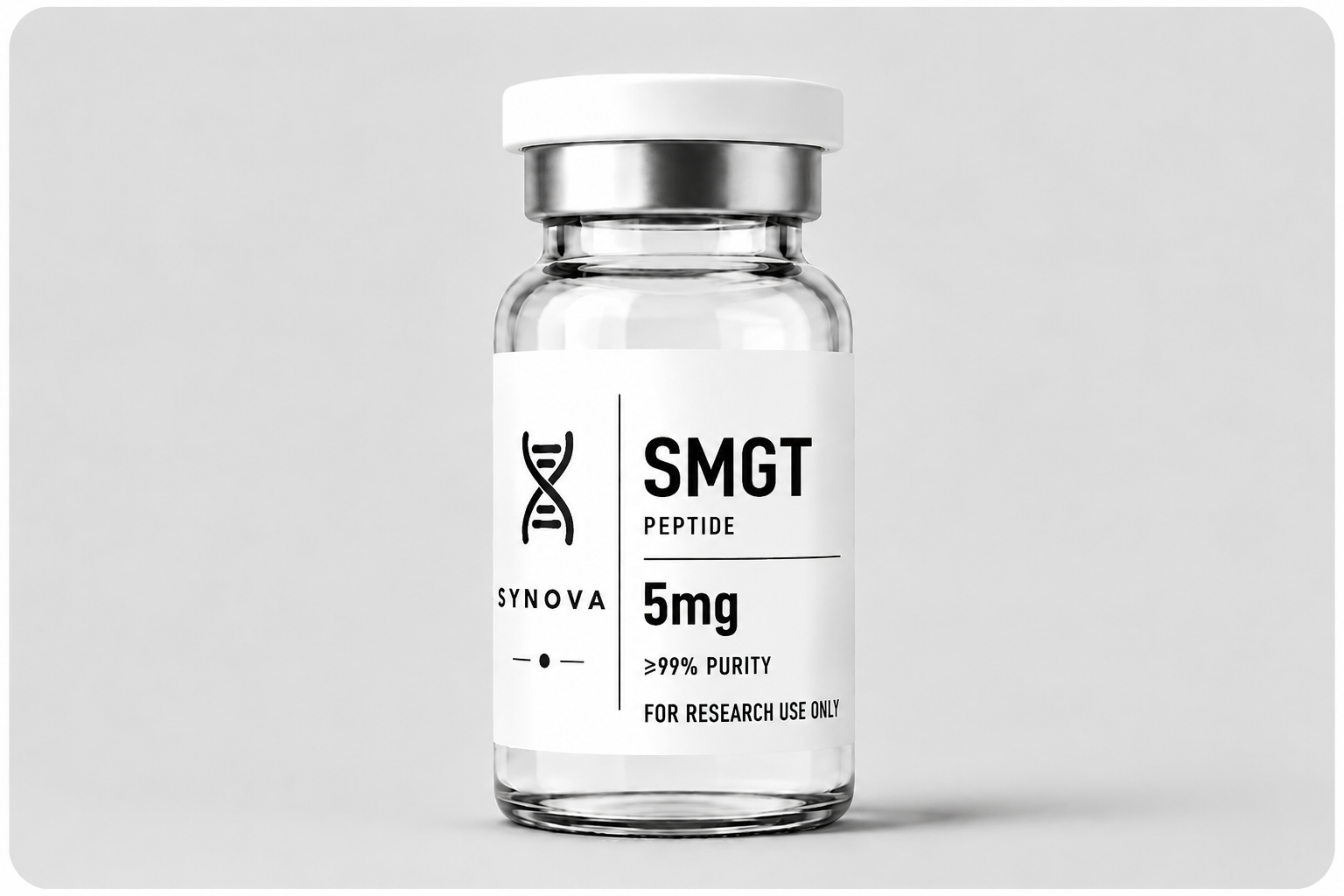
SMGT
Synthetic analogue of the GLP-1 hormone used in research to study glucose regulation, insulin secretion and the incretin response.